

The initial stage will see Hobart receive a 9-metre, 10-seat vessel as a proof of concept, ahead of a planned rollout of larger vessels. Fly Derwent is also in line to be the first operator globally to receive next-generation ~12-metre vessels capable of carrying around 30 passengers.
The first stage of Fly Derwent will focus on early commuter and premium tourism offerings, with plans to reconnect Hobart’s thriving waterfront tourism hub. Based out of the Hobart waterfront, the network will span the full length of the Derwent River, servicing 60 kilometres from New Norfolk to Opossum Bay.
Tasmania has been ahead of the clean energy curve since the late 1800s and remains at the forefront of renewable energy today.
Fly Derwent translates this advantage into leadership in sustainable transport, reducing environmental impact and operating costs, while insulating the state from reliance on imported diesel and the volatility of fossil fuels.
Here, abundant renewable energy and strong local ambition come together to show what zero-emissions marine transport can look like in the real world.

“It’s an entirely new mode of transport that enables us to use the river in a way that is more like a metro system than a ferry service."
“This world-leading technology unlocks affordable, river-based commuter and tourism transport in Hobart without the need for large-scale infrastructure..."
"The vision," says Vessev CEO Eric Laakmann, "is something closer to a subway system on the water – many routes, many locations, as many departures a day as boats and crew allow."
"We explored more conventional electric vessels, but they couldn't solve the core challenges of range, efficiency and wake in Tasmania's sensitive river environments. Hydrofoiling changes that completely, lifting the hull clear of the water, reducing drag and unlocking the efficiency needed to deliver commercial services on electric power alone."
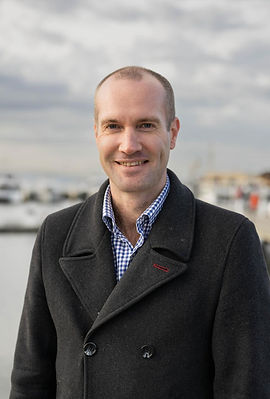
Fly Derwent Principle
With over 15 years of experience across energy, power, and utilities, Cameron currently leads WMC’s Energy practice to support clients navigating complex, capital-intensive environments.
He works with stakeholders across public and private sectors and is actively involved in business, real estate, and property development. He also contributes to board and not-for-profit environments, currently serving as chair for Water For A Village.

Vessev CEO
Eric started out at Apple, where he launched the first Apple Watch.
His love of the ocean took him 30,000 nautical miles across the Pacific before arriving in New Zealand.
As Vessev’s CEO, he leads with passion and collaboration.
Fly Derwent is a Tasmanian clean energy transport venture established by Cameron McCulloch.
It is the first in a series of projects aimed at unlocking multi-sector and community benefits by applying technology, renewable and sustainable solutions, and innovative financing approaches to long-standing transport and infrastructure challenges, rather than relying solely on conventional thinking or traditional government funding.
Vessev sits at the intersection of boatbuilding and applied technology, designing and building electric hydrofoiling vessels in Auckland, New Zealand. The company develops its vessels end-to-end – from hulls and foils through to propulsion and control systems.
The team draws experience from the America’s Cup, Rocket Lab, Apple and Tesla, combining high-performance marine design with advanced electronics and software. The result is an entirely new way to move on the water that is better for people and the planet.